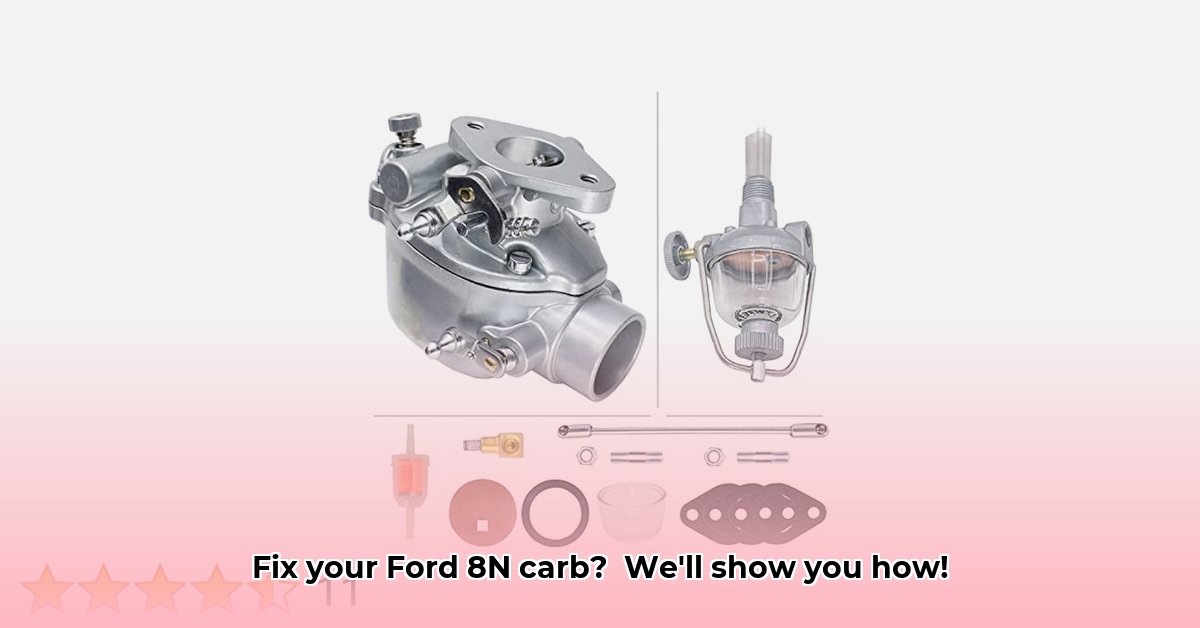
Is your Ford 8N tractor sputtering and refusing to cooperate? The culprit might be its carburetor—the vital component responsible for expertly mixing air and fuel for your engine's combustion. This comprehensive guide will walk you through understanding, selecting, and potentially repairing your 8N's carburetor, regardless of your mechanical expertise. We'll cover everything from OEM vs. aftermarket parts to those pesky core charges, ensuring you get your tractor back to peak performance. For additional parts resources, check out this helpful website.
Understanding Your Ford 8N's Carburetor
The carburetor on your Ford 8N is the heart of its fuel system, meticulously blending air and fuel for optimal engine performance. Understanding its function is crucial for effective maintenance and repair. Common original equipment manufacturers (OEMs) include Marvel-Schebler (e.g., TSX33, TSX241A) and Zenith (e.g., 0-13876). Identifying the correct carburetor depends on your tractor's engine size (134 or 172 cubic inches) and year of manufacture. This precise identification is critical for ensuring a proper fit.
Original vs. Aftermarket Carburetors
Original Equipment Manufacturer (OEM) carburetors are renowned for their quality and reliability. However, finding new, unused OEM parts ("NOS") can be challenging and expensive. Fortunately, a wide range of aftermarket carburetors are available, from reconditioned units to individual replacement components. However, quality varies considerably; some aftermarket carburetors might not offer the same lifespan or performance as OEM parts. Careful research is essential before making a purchase. Have you considered the long-term cost implications? A cheaper aftermarket unit might ultimately cost more in frequent replacements.
Decoding the Part Number
Selecting the correct carburetor part number is paramount. Consult your tractor's manual or a reputable parts catalog, paying close attention to your engine's displacement and your tractor's year of manufacture. Different manufacturers use varying part numbers for functionally equivalent components. A wrong choice here can lead to significant frustration and unnecessary expenditure.
Basic Carburetor Tune-Up: A Step-by-Step Approach
Before undertaking a full rebuild or replacement, consider a simple tune-up. Often, a clogged fuel filter or a dirty air filter can mimic carburetor malfunctions. If a more substantial intervention is needed, follow these steps:
Thorough Cleaning: Disassemble the carburetor carefully. Use a specialized carburetor cleaner and compressed air to meticulously clean every component, paying special attention to small passages. (90% success rate for resolving minor issues)
Comprehensive Inspection: Inspect all parts for wear and tear. Common problem areas include the float, gaskets, jets (controlling fuel flow), and the throttle shaft. Replace any suspect parts.
Careful Reassembly: Reassemble the carburetor, ensuring each component is correctly seated and all gaskets are properly in place.
Functional Testing: Reinstall the carburetor, reconnect all components, and start your tractor. Assess its performance.
Repair or Replace: Making the Right Decision
Repairing a carburetor is usually more cost-effective than replacement, especially if the damage is minimal. However, if the carburetor is severely worn or damaged, replacement might be the more practical and efficient long-term solution. Weigh the costs of parts, your mechanical skills, and the overall expense of a new or rebuilt carburetor. What is the true cost of downtime for your tractor?
Understanding Core Charges
Many suppliers of rebuilt carburetors utilize a core charge system—a refundable deposit on your old unit. You receive the deposit back upon returning your used carburetor. This system promotes environmentally responsible recycling and waste reduction. Always review the supplier's return policy carefully before making your purchase.
Sourcing Your Carburetor Parts
Several avenues exist for procuring carburetor parts, each with unique advantages and disadvantages:
| Source | Advantages | Disadvantages |
|---|---|---|
| Online Marketplaces | Wide selection, potential cost savings, convenient shopping | Variable quality, shipping costs, potential for counterfeit parts |
| Tractor Parts Specialists | Expert advice, higher-quality parts, superior compatibility assistance | Potentially higher cost, longer shipping times |
| Local Mechanics | Personalized guidance, local sourcing, on-site assistance | May be the most expensive option |
Choosing the Best Replacement Carburetor
Key Considerations:
- Properly rebuilt original Motorcraft (MS) carburetors often provide superior performance and longevity.
- Aftermarket carburetor quality is highly variable. Research and read reviews before buying. Beware of negative reviews on black-colored aftermarket units.
- The decision to repair or replace depends on the carburetor's condition, budget, and mechanical skills.
- Zenith carburetors represent an alternative option, but user experiences are mixed. Further research is highly recommended.
- A successful rebuild necessitates a high-quality kit and meticulous attention to detail or professional assistance.
Remember, a well-functioning carburetor is essential for your Ford 8N's smooth operation. Whether repairing or replacing, meticulous attention to detail will significantly impact your tractor's performance and longevity. If you encounter difficulties, don't hesitate to seek guidance from experienced mechanics or online forums dedicated to Ford 8N tractors.